

A typical day for a plumber is filled with diagnostic challenges, pipe repairs, emergency leaks, and client conversations. After spending hours under a sink or crawling through a crawlspace, the last thing worth another hour is wrestling with paperwork, recalculating labor rates, and reformatting billing documents. Yet getting paid promptly depends entirely on sending a clear, professional, accurate document. If you have ever asked yourself how to write an invoice for plumbing that looks professional and gets settled fast, you are not alone.
Streamlining your administrative workflow protects cash flow, and a standard plumbing invoice template can completely change how you manage business finances. This guide covers what a plumbing bill must contain, how to price and describe the work without triggering disputes, and how BankGPT turns billing into a few minutes of work after the last job of the day.
Why Plumbing Invoice Tools Matter in 2026 and Beyond

Picture finishing a complex emergency water heater replacement late at night. You pack up your tools, shake hands with the relieved homeowner, and drive back to the workshop. Instead of resting, you now face a pile of administrative tasks: sorting receipts for copper pipes, fittings, and sealant, calculating billable hours, and trying to design a clean invoice from scratch in a generic word processor.
Without a standardized system, the same billing pitfalls appear on almost every job:
- Forgotten line items. Small parts, disposal fees, and travel time slip through the cracks, and each missed line eats directly into margin.
- Delayed payments. Illegible or poorly structured invoices confuse customers, which slows approval and invites disputes.
- Inconsistent branding. Mismatched documents hurt your credibility in a competitive local market where referrals matter more than advertising.
Search demand reflects the same pain. Plumbers increasingly look for an invoice generator that works from a phone on site rather than a desktop program back at the office, because the fastest payment is the one sent before you leave the driveway.
What Changes in 2026 and Beyond
Three shifts are making professional billing a competitive requirement rather than a nice-to-have. Mobile-first customers expect a link, not a paper slip. Property managers and commercial accounts increasingly require itemized records before they release payment. And administrative time is now the scarcest resource in a trade business, so any hour spent retyping a bill is an hour subtracted from billable work or rest.
That is why the question of how to write an invoice for plumbing has moved from an accounting afterthought to an operational priority for owners who bill weekly instead of monthly.
Why Modern Plumbers Need an Advanced Invoice Generator Online
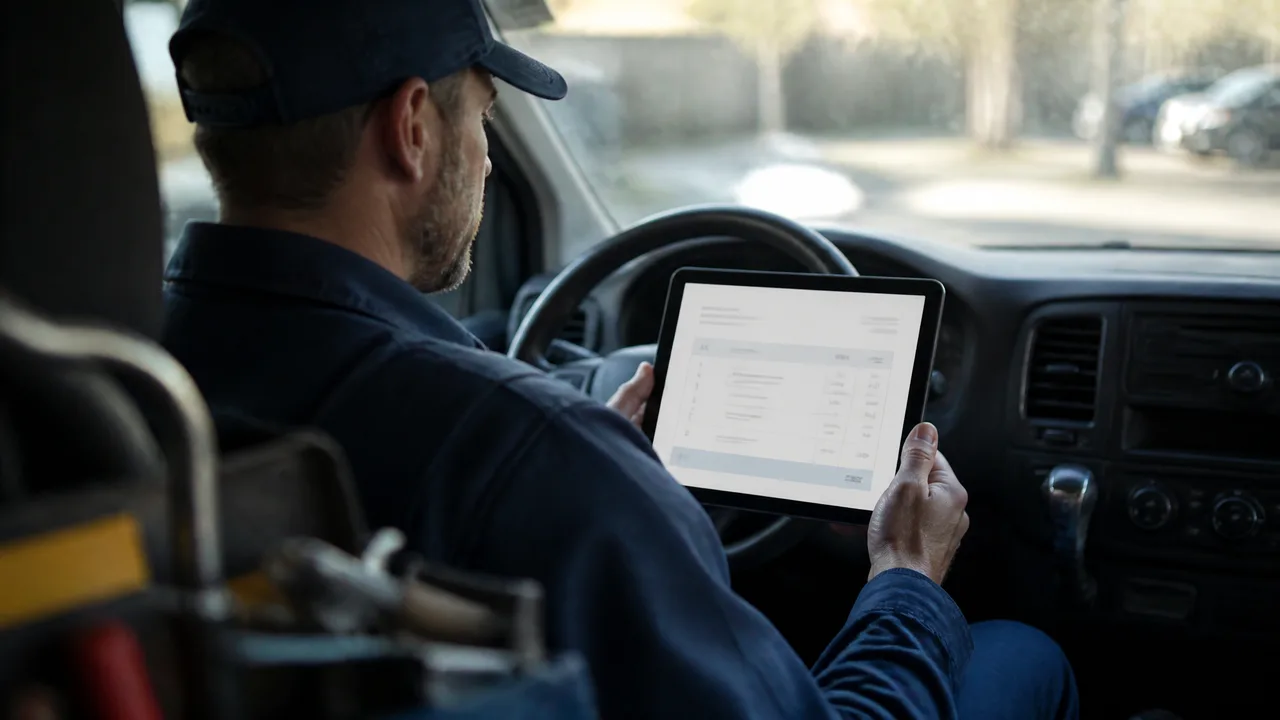
Traditional desktop software and manual templates are often rigid, slow, and disconnected from how plumbers actually work. Modern plumbing businesses need agility. You might finish a job on site using a smartphone or tablet and want to dispatch the bill before you drive away.
An advanced online invoice generator delivers that agility. Instead of manually typing every line item or recalculating subtotals, taxes, and discounts, a connected tool handles the arithmetic, keeps your rate card consistent, and produces the same professional layout every time. That consistency is what turns billing from a chore into a routine you can finish in a few minutes on site.
Key Capabilities That Make the Difference
BankGPT sits at the forefront of financial automation, and its capabilities are built for service professionals rather than accountants in an office:
- AI-powered data analysis and generation. Input rough notes, voice memos, or raw field data about a job, and the system analyses the information to auto-populate your plumbing invoice template. Labor, parts, and service fees are categorized correctly, which removes calculation mistakes.
- Batch generation for high-volume operations. If you manage commercial accounts, apartment complexes, or recurring maintenance contracts, you can process dozens of documents at once instead of one by one, saving entire workdays each billing cycle.
- Diverse, professional templates. A rich library of layouts tailored to the trade lets you match your brand identity, from minimalist designs to service-detailed documents.
- Real-time online preview and editing. Every change updates instantly on screen, so you can review discounts, tax rates, and customer details before finalizing.
- Seamless online printing and instant download. Trigger high-quality printing in one click or download a PDF for email attachment or cloud archiving.
- Transparent pricing with no accounting software required. You do not need a license to a full accounting suite just to send a clean bill for a drain cleaning or a repipe.
How to Write an Invoice for Plumbing: A Step-by-Step Guide
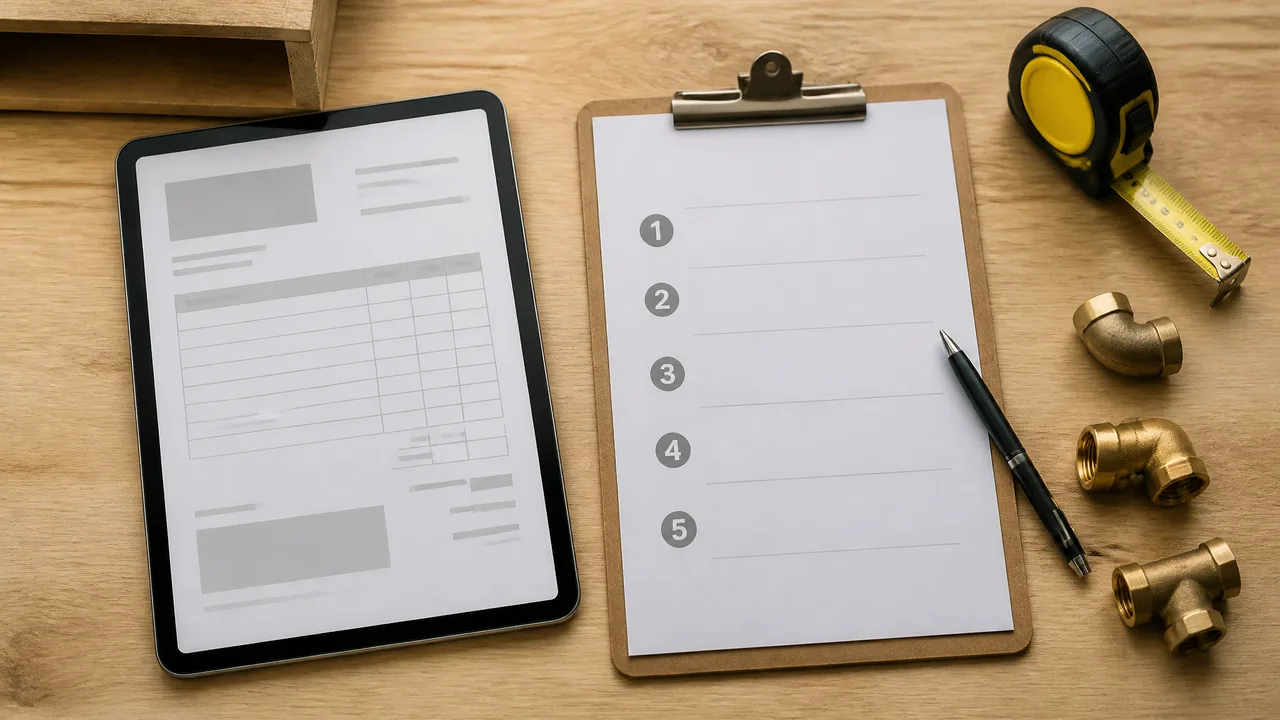
To maximize clarity and ensure prompt settlement, every plumbing bill should carry the same core components. Follow this structure whether you use a digital tool or write the document by hand, and treat the order as fixed so repeat clients always know where to look for the total and the due date.
Getting Started with Your Invoice
- Identify your business. A clear header with your plumbing company name, logo, license number, phone number, email address, and physical business address. The license number matters more than most plumbers think, because it reassures homeowners that the work is covered and traceable.
- Identify the client and the property. The full name, service address, and contact details of the owner or property manager. For rental and commercial work, note who authorizes payment separately from who receives the bill.
- Record invoice metadata. A unique invoice number for tracking, the date of issue, and an explicit payment due date such as Net 15 or Net 30. Never leave the due date implicit, since the wording of that line determines when you can follow up.
- Itemize the scope of work. Break down labor hours and hourly rate, the specific parts used such as PVC elbows, valves, or gaskets, and a plain description of each service performed. Group related tasks into one line when they belong to the same visit, and separate diagnostic work from repair work.
- Show subtotals, taxes, and totals. A transparent calculation of the labor and materials subtotal, applicable local sales tax on parts, and the grand total due. If your jurisdiction taxes materials but not labor, say which is which.
- State payment terms and methods. Accepted payment methods such as card, bank transfer, or check, plus any late fee policy. A visible payment link is the single most effective way to shorten your collection cycle.
Once those six blocks are in place, sending the bill becomes a two-minute task instead of an evening project.
Best Practices for Accurate Plumbing Invoices
An accurate invoice protects both margin and reputation. These habits make the difference between a bill that is approved on sight and one that starts a phone argument.
- Log parts on site, not from memory. Enter the fittings, sealant, and fixtures while the van is still in the driveway. Reconstructing a materials list from receipts later is where most money quietly disappears.
- State the problem and the fix in plain words. A line such as cleared a blocked kitchen drain to the main stack is accepted quickly, while a line such as labor, 2 hours invites questions.
- Separate chargeable trips from included visits. If a warranty callback or return trip is free, show it as a zero-charge line so the customer can see the value instead of wondering what changed.
- Let the tool do the math. Recalculate nothing by hand. One transposed digit in a subtotal undermines every other number on the page.
- Use the same layout every time. Repeating one template builds familiarity with repeat clients and property managers, and familiarity is what makes approvals routine.
- Keep a plain description of the work in your records. If a customer disputes a charge weeks later, the itemized invoice is the document that ends the conversation.
Who Benefits Most from a Reliable Plumbing Invoice Template

The gains show up fastest where job volume and tight cash flow meet. An independent plumber sending a handful of bills a week benefits from finishing billing in the evening instead of the weekend. A small contracting team with several technicians gains consistency, because every invoice leaves with the same structure and rate card regardless of who did the work. Commercial and property management accounts benefit most from detailed records, since itemized invoices clear their approval process faster than summarized ones.
Part of the value is simply documentation. An itemized bill is also a service record, and it answers the callback question before it becomes a dispute: when the same fitting fails three weeks later, the invoice shows exactly what was installed and on what date.
For any of these businesses, a dependable plumbing invoice template pays for itself in reclaimed hours alone. The difference becomes visible in the second month, once sending a bill stops feeling like a separate job.
Frequently Asked Questions
What should a plumbing invoice include?
A plumbing invoice should include your business details and license number, the client and service address, a unique invoice number with issue and due dates, an itemized list of labor hours, parts, and services, a clear subtotal and tax breakdown, and your payment terms and accepted methods. Missing any of these blocks is the most common reason a bill gets delayed.
How should I bill for parts and materials?
Bill materials item by item with a plain description and quantity, and apply sales tax according to your local rules. A modest, consistent markup on materials is standard practice in the trade; the key is applying it the same way on every invoice so the customer never sees surprising variation.
Should I charge for diagnostic visits?
Yes, in most cases. A diagnostic or trip fee compensates for time and fuel spent before any repair begins, and stating it up front prevents the awkward conversation that happens when a customer learns the visit itself was billable. If you waive the fee when the customer approves the repair, show the waiver as a line item.
What payment terms work best for plumbers?
Net 15 or payment on completion works well for residential work, while Net 30 is more common for commercial and property management accounts. Whatever you choose, state the due date explicitly, include a payment link, and add a late fee policy to your terms so follow-up has a documented basis.
Can I write a plumbing invoice on my phone?
Yes. An online invoice generator lets you build the document on site, review the numbers in a live preview, and send a PDF before you leave. That speed is usually the difference between payment this week and payment next month.
How should I price emergency and after-hours calls?
Publish an emergency rate separate from your standard hourly rate, and state the window in which it applies, for example after 6pm and on weekends. Announcing that rate when the call is booked prevents the most common dispute in trade billing, which is a customer who assumed the after-hours visit was priced like a weekday one.
How do I write an invoice for plumbing work when a callback is involved?
Create a new invoice for the callback and show the returned labor or replaced part as a zero-charge line, referencing the original invoice number. This keeps your revenue records honest while making it obvious to the customer that the return visit was covered, which is far clearer than simply sending nothing.
What if the customer disputes a line on the invoice?
Respond with the itemized detail rather than a summary: the parts list, the hours logged, and the description of the work performed. Because an itemized invoice records both the problem and the fix, most disputes settle once the customer can see exactly what was done. Keep the document on file, since it is the record that resolves the question weeks later.
Do I need accounting software to send a professional invoice?
No. A dedicated billing tool produces a clean, itemized document with taxes and totals calculated correctly. Accounting software helps with bookkeeping across the year, but it is not a requirement for sending a professional bill.
Final Verdict
Running a successful plumbing business takes skill, dedication, and the right operational tools. Administrative bottlenecks should never get in the way of growth or cash flow. A repeatable invoice routine removes billing friction entirely: the same structure, the same rate card, and the same calculation logic on every job, so payment arrives without a follow-up call.
If billing is still eating your evenings, send one real invoice through a template this week and compare how quickly it is paid against your usual process. The difference is usually obvious on the first job.
Try the plumbing invoice template and the rest of the BankGPT financial toolkit to itemize labor and parts, preview totals in real time, and send a professional bill before you leave the driveway.
Written by Jordan Lee, an independent reviewer of small business finance and FinTech tools.